

What to Expect at Ascend Chiropractic
Our Process
Starting something new can feel overwhelming, but our goal is to make your experience feel simple, clear, and supportive from the very beginning. Here is what your care journey looks like at Ascend Chiropractic.
-
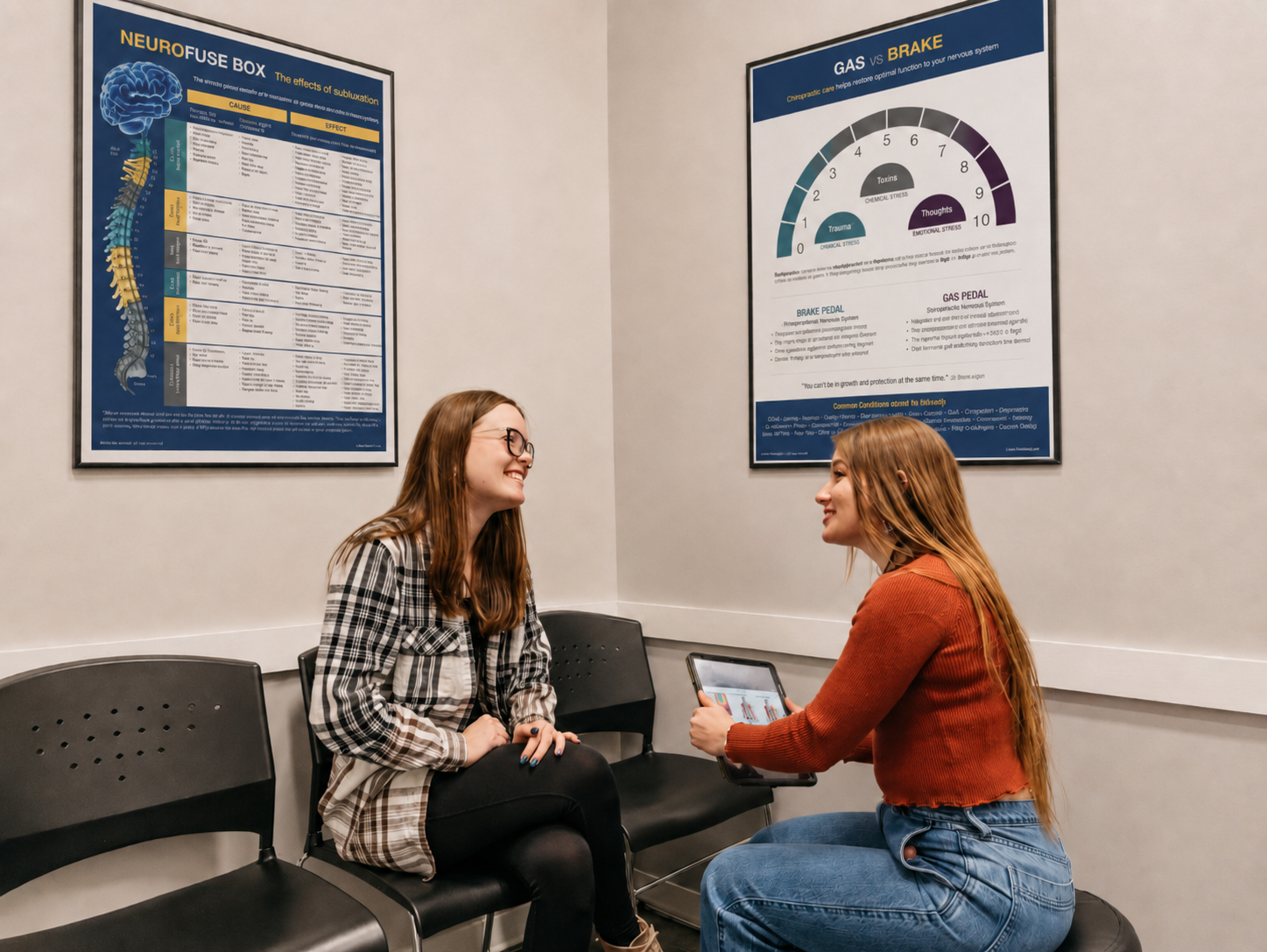
Your first visit begins with a conversation. We’ll take time to hear your story, understand what brought you in, and learn about your goals for yourself or your family. This visit is designed to help you feel heard, supported, and confident as you take the first step in your care.
-
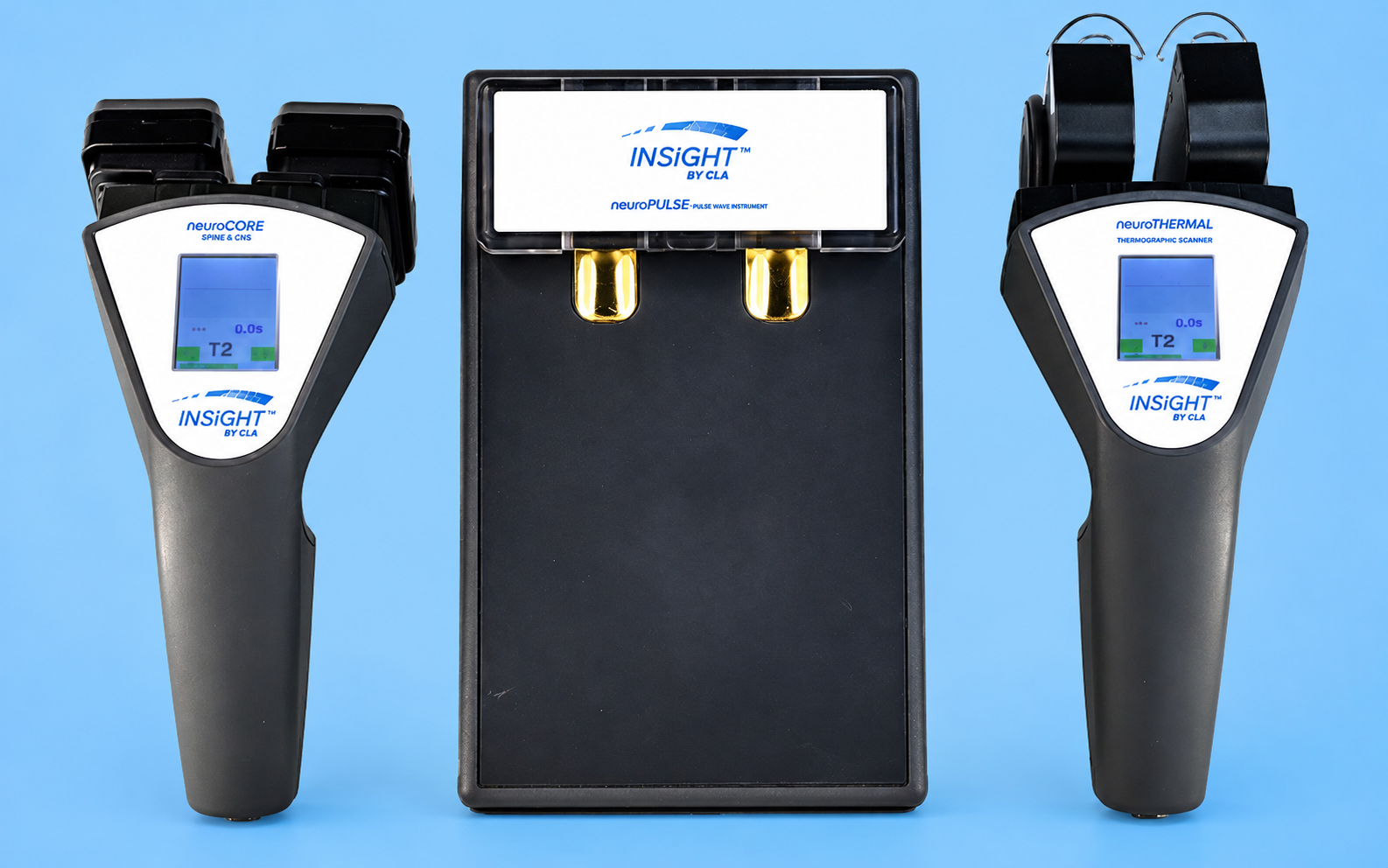
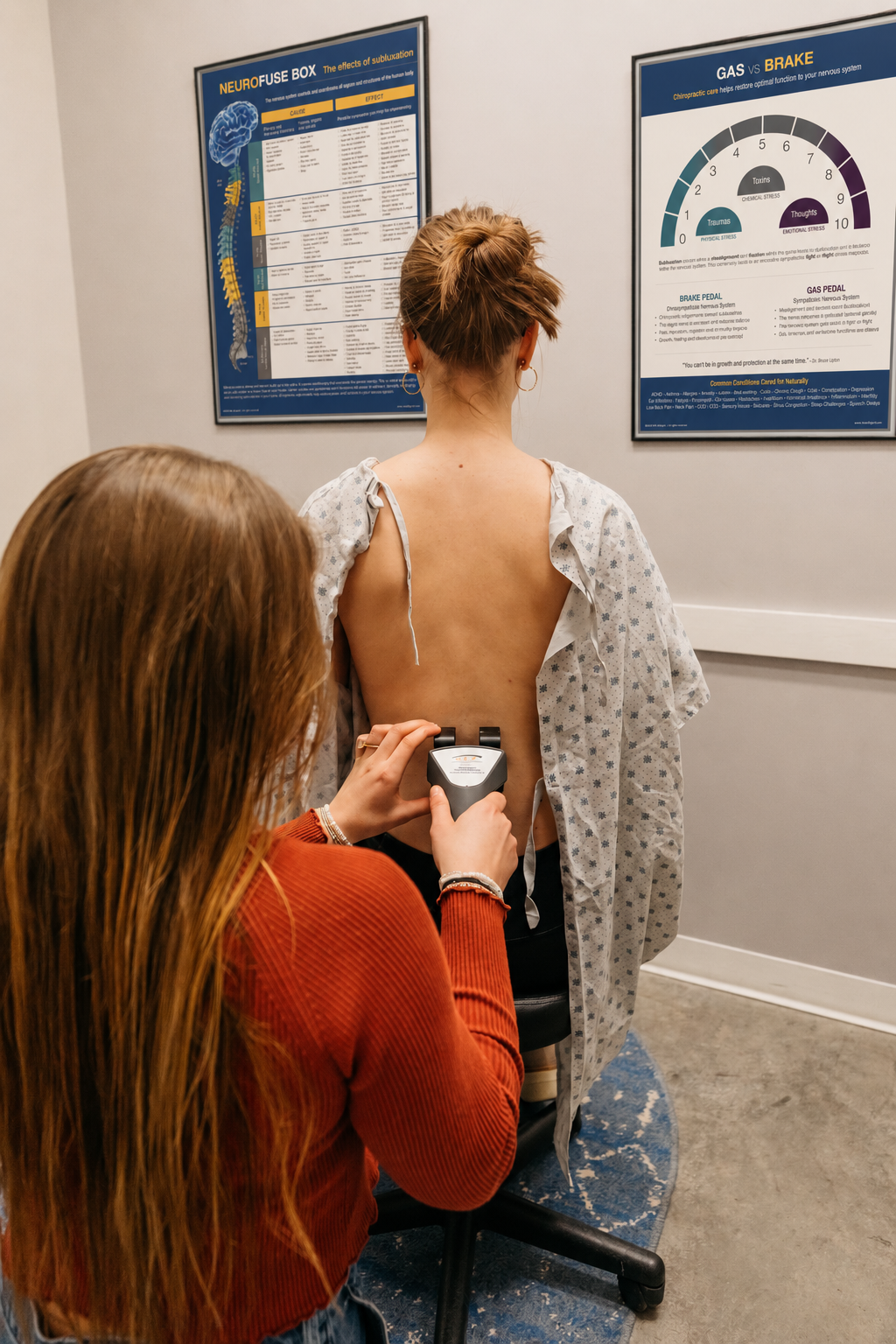
Next, we use three non-invasive INSiGHT scans to take a closer look at how your nervous system is functioning. These scans help us identify patterns of stress and imbalance, giving us objective information about how your body is adapting to life’s daily demands.
This step helps us better understand what may be happening beneath the surface, so your care can be specific, informed, and personalized to you.
-
We bring together your health history, nervous system scan results, and physical exam findings to better understand how your body is functioning as a whole. This helps us identify the patterns behind what you may be experiencing and make recommendations that are specific to you.
If additional imaging, such as X-rays, may be helpful, we’ll talk through that with you and explain why before moving forward.
-
At your follow-up visit, we’ll walk you through your results in a way that is clear and easy to understand. We’ll explain what we found, what it means, and how your nervous system patterns may be influencing how your body feels and responds.
From there, we’ll recommend a personalized care plan designed to support better function, build resilience, and help you make meaningful progress over time.
-
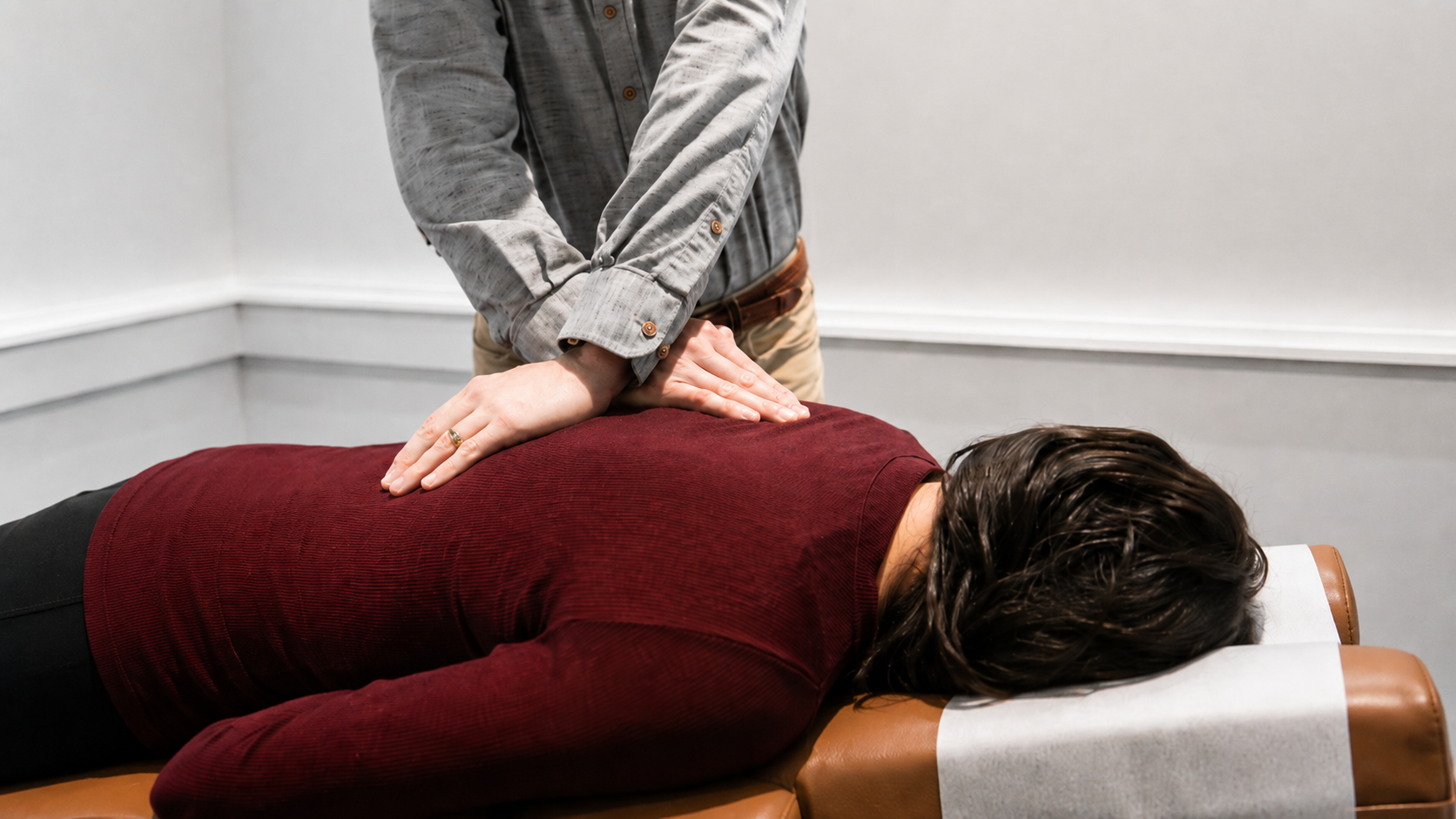
Your care begins with gentle, neurologically focused chiropractic adjustments tailored to your body and nervous system. Each adjustment is specific and intentional, designed to help reduce stress on the nervous system and support clearer communication between the brain and body.
-
Progress is a process, and we are here to walk with you every step of the way. As you move through care, we perform periodic re-scans to track changes in your nervous system and adjust your care plan as needed. This helps you see your progress over time and better understand how your body is adapting.
As your nervous system becomes more balanced and adaptable, our goal is to help you build greater capacity to handle stress, move through your day with more ease, and enjoy life more fully.
Learn More About INSiGHT Scanning Technology
At Ascend Chiropractic, we use INSiGHT scans to assess nervous system function and track progress throughout your care. These scans are completely non-invasive, gentle, and appropriate for the whole family — from infants to adults.
The scans we use include HRV, NeuroMuscular EMG, and NeuroThermal scans. Together, they help us better understand how your body is adapting to stress, how your nervous system is communicating, and where your body may need support.
This technology allows us to create care that is specific, informed, and personalized — and to reassess along the way so we can track progress, understand how your body is adapting, and adjust your care plan as needed.
-
What it shows:
HRV stands for heart rate variability, which measures the natural variation in time between each heartbeat. Rather than looking only at your heart rate, HRV gives us insight into how flexible and adaptable your autonomic nervous system is.Your autonomic nervous system has two main branches: the sympathetic side, which helps your body take action and respond to stress, and the parasympathetic side, which helps your body rest, digest, recover, and regulate. A healthy nervous system should be able to shift between these states as needed.
Why we use it:
Your HRV scan helps us understand how well your body is adapting to life’s demands. When your results show healthy balance and strong energy reserves, it tells us your nervous system has more capacity to respond to stress and recover afterward.When results shift too far in one direction or fall outside of the ideal range, it may suggest that your body is spending too much time in a stressed, depleted, or less adaptable state.
How it helps your care:
By tracking HRV over time, we can better understand how your nervous system is responding to care. Reassessments help us see how your body is adapting, identify changes in resilience and regulation, and adjust your care plan as needed.Our goal is to help support a nervous system that is more balanced, adaptable, and resilient — so your body can better handle the demands of everyday life.
-
What it shows:
Our NeuroMuscular EMG, or Surface Electromyography, measures patterns of muscle activity along the spine. This helps us understand how much energy your body is using to maintain posture, stability, and basic function.In simple terms, it shows us how much “background noise” or stress your nervous system may be carrying.
Why we use it:
When the nervous system is under stress, muscles may become overactive, underactive, or imbalanced. Over time, these patterns can affect posture, coordination, movement, and how efficiently your body responds to daily life.The EMG scan helps us evaluate symmetry, muscle tone, and total energy output so we can better understand where your nervous system may be working harder than it should.
How it helps your care:
A helpful way to think about it is like pressing the gas pedal while your car is still in park. Your body may be using a lot of energy, but not moving forward as efficiently as it could.By tracking EMG patterns over time, we can see how your nervous system is responding to care, how efficiently your body is adapting, and whether your care plan needs to be adjusted moving forward.
Our goal is to support a nervous system that uses energy more efficiently, adapts with greater ease, and helps your body function with more balance and resilience.
-
What it shows:
The NeuroThermal scan helps us evaluate how your autonomic nervous system is functioning. This part of the nervous system controls many of the automatic processes in the body, including heart rate, digestion, circulation, immune response, and stress regulation.This scan measures temperature patterns along both sides of the spine. Because the nervous system helps regulate blood flow and circulation, temperature differences can give us insight into where stress patterns may be showing up in the body.
Why we use it:
When certain areas show increased temperature differences, it may suggest that part of the nervous system is working harder than it should or having difficulty communicating efficiently.These patterns can help us better understand how your body is adapting to stress and where your nervous system may need support.
How it helps your care:
By identifying these patterns, we can be more specific and intentional with your care. Reassessments allow us to track how these patterns change over time, better understand how your body is adapting, and adjust your care plan as needed.Our goal is to support clearer brain-body communication, better regulation, and a nervous system that can function with greater balance and efficiency

No two people are the same, and your care should reflect that. We design care around your specific nervous system patterns, goals, and needs. This personalized approach helps us create care goals that are specific, intentional, and focused on long-term progress.
Your care begins with a conversation. Share a little about yourself, and our team will reach out to learn more about your needs, answer your questions, and help schedule your initial consultation.
Your First Step Starts Here
Fill out this form and we will reach out to you to schedule your initial consultation!